
Scotland has recorded the best figures so far for electricity generated by renewable power (mostly wind). For years Orkney has generated electricity through renewables well beyond that needed for its own use.
Despite this great news for our climate – the costs to homes and businesses of ever rising prices has meant stark choices being made. For householders, the choice between eating or heating is a reality for many, and for businesses – some simply cannot afford to keep going.
The Scottish Parliament will debate the scrapping of electricity standing charges in a motion brought before MSPs by Gordon MacDonald, SNP, who represents the Edinburgh Pentlands Constituency.
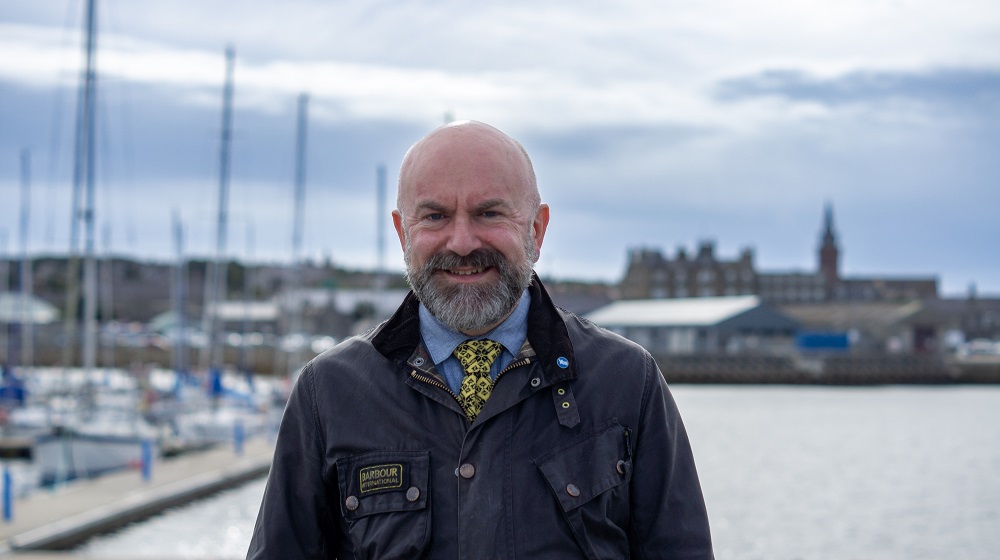
The opportunity to raise this in our Parliament has been welcomed by Robert Leslie, the SNP candidate for Orkney & Shetland in the upcoming General Election.
The motion, which has cross party support, highlights how Scottish energy users could be paying over 60% more in electricity standing charges than people in London, with standing charges set at almost 60 pence per day for electricity in the north of Scotland. Standing charges in London are less than 40 pence per day.
Robert Leslie said:
“Too many households across Orkney and Shetland are heavily rationing their electricity usage this winter, with the UK Government having failed to repeat the £400 of support that was paid last year.”

“At the same time the Scottish Government tripled its Fuel Insecurity Fund to £30 million, ensuring that vulnerable households across the country have access to enhanced awards from schemes such as the Home Heating Support Fund.
“As Gordon MacDonald’s motion points out, Scottish customers are being penalised by a complex and unfair charging system, and the UK Government needs to scrap standing charges and institute a more equitable price structure.”
Highlighting the recent House of Commons Scottish Affairs Committee report on the impact of the rising cost of living on rural communities in Scotland, Robert Leslie focused on evidence from Shetland Islands Council showing that, by October 2022, 75% of Shetland households could spend 10% of their household income on home energy costs, with some spending as much as 40%.
“The evidence from Shetland Islands Council, indicating that average Shetland household energy costs are roughly double the UK average, is a stark reminder that those of us living off the gas grid face unsustainably high electricity bills if we want to keep our homes warm.
“On top of that, a new report from the International Energy Agency (IEA) has shown that UK electricity prices have increased at a higher rate than any other developed country in recent years, rocketing by 19% in the past year, and doubling since 2019, in contrast to the United States, where annual rises since 2019 have averaged 5%. The IEA report shows that the tax and levies on electricity in the UK are roughly two and a half times those on gas – another inexplicable inequity in the push for clean, green energy.
“These unsustainable hikes have forced many families to significantly under-heat their homes, some have shifted their sleeping arrangements to their living rooms so they can switch off heating in most rooms. Others are burning imported gas in portable heaters, having switched their electric heating off. In islands where renewable electricity generation outpaces demand this should not be happening.

“While energy policy remains in control of Westminster, the Scottish Government has no influence on the price of electricity. Only independence can bring Scotland the powers to create fairer pricing.”
“ However, we can put pressure on the UK Government to act by taking a cross-party stand on this and I would urge our local MSPs to join this call for scrapping damaging standing charges, otherwise their campaigns on fuel poverty will have a hollow ring to them.”
Gordon MacDonald’s motion:
That the Parliament understands that standing charges are the fixed component of customers’ energy bills, and that Ofgem, the energy regulator for Great Britain, has set the maximum standing charge that a supplier can charge a customer at 29.6 pence per day for gas, 62.08 pence per day for electricity in southern Scotland, and 59.38 pence per day for electricity in northern Scotland; further understands that Scottish consumers using both fuels, including those in the Edinburgh Pentlands constituency, could be paying up to £335 per year before they use any power to heat or light their home; believes that Scottish energy users could be paying 61% more in electricity standing charges than people in London, despite Scotland being what it sees as an energy-rich nation and reportedly generating far more electricity than is used domestically; further believes that Scottish customers are being penalised by a complex and unfair charging system, and notes the calls for the UK Government to scrap standing charges and institute a more equitable price structure.
Supported by: Karen Adam, Alasdair Allan, Colin Beattie, Stephanie Callaghan, Maggie Chapman, Willie Coffey, Bob Doris, Jackie Dunbar, Annabelle Ewing, Jim Fairlie, Kenneth Gibson, Clare Haughey, Bill Kidd, Rona Mackay, Ben Macpherson, John Mason, Ivan McKee, Audrey Nicoll, Ash Regan, Collette Stevenson, Kevin Stewart, David Torrance, Evelyn Tweed

Fiona Grahame




Leave a Reply