
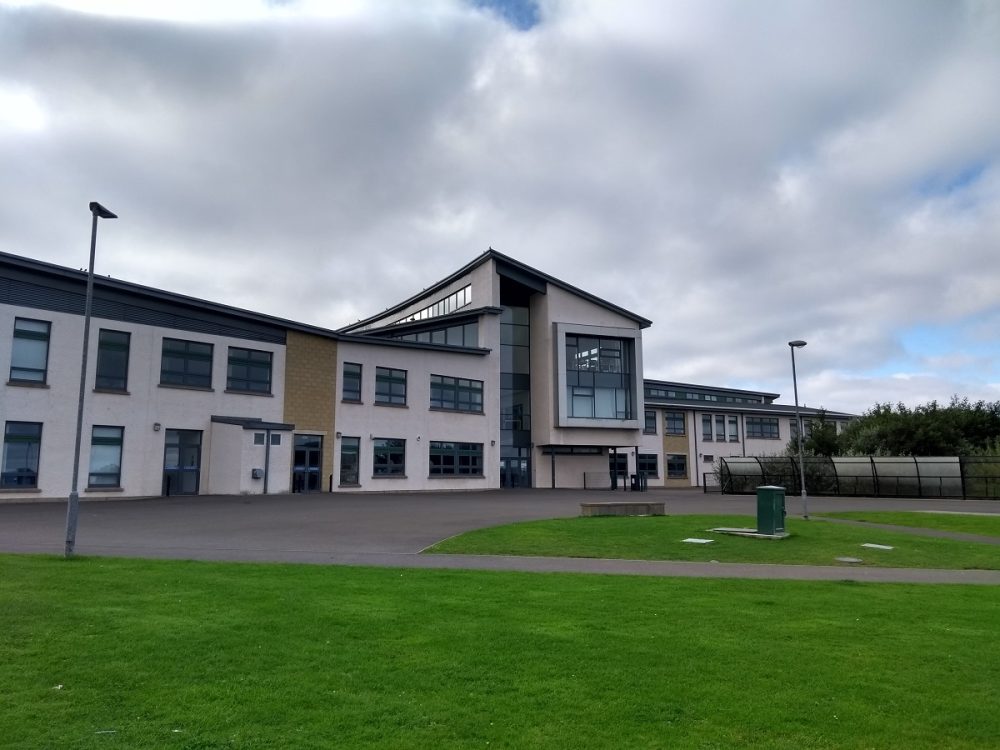

One of the results of Scotland’s ageing demographic is its effects on various employment sectors. Education is a key government priority but recently issued information by the GTC (General Teaching Council) of Scotland) reveals a concerning picture for future teacher numbers. Will the increased funding from The Scottish Government address the challenges facing Education in Scotland?
A survey conducted by the GTC found that over half, 58%, of teachers left the registry due to retirement. All teachers employed in Scottish schools are legally required to be registered with the GTC.
On 31 March 2024 there were 81,806 individual registrants on the Register, of which:
- 41,809 registrations in Primary Education
- 37,867 registrations in Secondary (Subject) Education
- 693 registrations in Additional Support Needs
- 3,615 registrations in Further Education
- 272 registrations in historical registration categories that are valid but no longer in active use
Not all those who are registered as teachers are currently employed as such for a variety of reasons including being unable to find employment.
The number of teachers employed in Scotland decreased to 53,412 full-time equivalents (FTE), a drop of 621 FTE compared to the previous year. Although the number of pupils also decreased, the pupil teacher ratio increased from 13.2 to 13.3. The pupil teacher ratio varies considerably across and within Local Authority areas. This trend was also reflected in a rise in the average class size in primary schools which was 23.3, up from 23.2 in 2023.

The number of teachers employed varies greatly between Local Authorities, due to the size of council areas, the number of schools, and the priorities of each council.
Orkney Teacher Numbers
In Orkney there was a total of 253 teachers employed: Primary 115; Secondary 129; and Centrally employed (includes specialists) 9. This is the smallest number of teachers employed by any council however, Orkney is also the smallest Local Authority. Orkney employed slightly more teachers in 2024 than in 2018. Some Local Authorities have cut the number of teachers they employ. (See table at the end of article)
Orkney’s pupil teacher ratio has decreased from 11.1 in 2018, to 10.8 in 2024. That number varies considerably across the islands’ schools.

Early Learning Sector
The largest increase is in the Early Learning Sector. Scotland has offered 1,140 hours a year of high quality funded early learning and childcare to all 3 and 4 year olds and eligible 2 year-olds, since 2021. There were 2,575 centres providing funded Early Learning and Childcare (ELC), not including childminders. This is a decrease from 2,582 in 2023, and a continued decrease from 2,630 in 2021. The number of Teachers, graduate staff, and staff working towards graduate qualifications at centres providing funded early learning and childcare, in Orkney, Full Time Equivalent (FTE) is 24. In more detail: 4 Teachers; 16 Graduates; 4 Working Towards Graduate Qualifications. The percentage change since 2023 is 13%.
Funded registrations for early learning and childcare by age group, September 2024 in Orkney
| Under 2 year olds | All 2 year olds | % of all 2 year olds | % of eligible 2 year olds | 3 & 4 year olds | % of eligible 3 & 4 year olds | Deferred entry | % of those eligible to defer | Total |
| 0 | 7 | 4 | 54 | 281 | 102 | 59 | 64 | 347 |
Teacher Probationers
With many teachers either retiring, or close to retirement, encouraging a new tranche of teachers into the workforce is vital. Scotland has a Teacher Induction Scheme probation process. All teachers in Scotland are degree qualified. The Scottish Government scheme provides a guaranteed one year, full time placement to every eligible provisionally registered teacher in a local authority to every eligible student graduating with a teaching qualification from one of Scotland’s Higher Education Institutions.
The scheme is not compulsory. Those newly qualified can choose to follow the Flexible Route instead. On the Flexible Route, teachers are responsible for finding their own employment.
The survey by the GTC found that 81% of those on the Teacher Induction Scheme were female, and 18.2% male. For those on the Flexible Route: 61.5% were female, and 38.5% were male. More of those on the Flexible Route had caring responsibilities which is possibly a reason for choosing that option.
The GTC survey recorded how probationary teachers felt about their experience in coming into the profession. Overall, respondents reported a positive experience, with ‘rewarding’, ‘challenging’ and ‘exciting’ the words most often used to describe it. Although this is a positive result, concerningly 11.5% reported experiencing bullying, harassment, racism or other discrimination in their work as a provisionally registered teacher.

The Cabinet Secretary for Education and Skills in the Scottish Government is Jenny Gilruth. She told MSPs in the Scottish Parliament on 10th December 2024
“The Government believes that teacher numbers are pivotal in closing the poverty-related attainment gap. No parent, pupil, educationalist or political party in Scotland would argue that educational improvement can be advanced with fewer teachers in our schools.
“I am therefore pleased—particularly when the pupil roll in Scotland has dropped by 3,100 in the past year—that our overall pupil teacher ratio has remained relatively stable, at 13.3, and is by far the lowest in the United Kingdom. However, I am disappointed that teacher numbers have reduced in the past 12 months, despite the additionality of the £145.5 million that the Scottish Government provided.”
In her statement she confirmed that the Scottish Government was uplifting the £145.5 million to maintain teacher numbers by £41 million; an additional £28 million to address additional support needs in our schools; and offering Scotland’s councils an extra £69 million, which will see local government and the Scottish Government commit to working together to restore teacher numbers to 2023 levels next year.
And she continued:
“I recognise that persistent and stubborn challenges remain in our education system in relation to teacher employment. Those challenges are not new—I raised that issue in my first speech in the chamber back in 2016, which was predicated on my experiences as a faculty head and those of my peers. Like members across the chamber, I have been concerned about reports of new teachers struggling to find permanent roles…. The allocation of an additional £69 million will therefore help local authorities to provide greater job security, because they will have the ability to offer more permanent posts.”
It means that the Scottish Government is increasing the funding available to local government to £186.5m, and will issue £145.5m to local government in full this financial year. Local Government will also receive additional funding of £28 million from 2025-2026 to develop the Additional Support for Learning (ASL) education workforce along with an enhanced offer in support, spanning all stages of the curriculum from the early years to the end of secondary. Further funding of £1 million is also being made available to support national initiatives which will help to recruit and train more ASL teachers.
COSLA , the organisation which represents Scotland’s Local Authorities stated that the “Local Government and Scottish Government are committed to working together to restore teacher numbers to 2023 levels next year, and freeze learning hours which will support the learning experience for pupils across Scotland. Both Local Government and the Scottish Government have also agreed to make meaningful progress towards reducing class contact time for teachers, in recognition of the asks made by teachers and teaching unions. Medium- and long-term joint workforce planning will take into account the importance of responding to issues including different local needs.”
Teachers in schools and ELC, local authority, 2018 to 2024 (FTE, all sectors including ELC)
| Local Authority | 2018 | 2019 | 2020 | 2021 | 2022 | 2023 | 2024 |
| Aberdeen City | 1,671 | 1,702 | 1,753 | 1,763 | 1,836 | 1,847 | 1,888 |
| Aberdeenshire | 2,664 | 2,714 | 2,739 | 2,752 | 2,747 | 2,734 | 2,647 |
| Angus | 1,167 | 1,180 | 1,208 | 1,182 | 1,156 | 1,172 | 1,134 |
| Argyll and Bute | 870 | 843 | 858 | 872 | 835 | 848 | 841 |
| City of Edinburgh | 3,484 | 3,584 | 3,609 | 3,666 | 3,725 | 3,759 | 3,731 |
| Clackmannanshire | 519 | 527 | 557 | 559 | 556 | 555 | 564 |
| Dumfries and Galloway | 1,453 | 1,455 | 1,421 | 1,433 | 1,389 | 1,403 | 1,387 |
| Dundee City | 1,358 | 1,355 | 1,376 | 1,418 | 1,395 | 1,431 | 1,400 |
| East Ayrshire | 1,198 | 1,218 | 1,246 | 1,275 | 1,243 | 1,206 | 1,189 |
| East Dunbartonshire | 1,278 | 1,300 | 1,397 | 1,410 | 1,393 | 1,405 | 1,379 |
| East Lothian | 973 | 981 | 1,014 | 1,035 | 1,031 | 1,041 | 1,017 |
| East Renfrewshire | 1,308 | 1,338 | 1,355 | 1,381 | 1,393 | 1,407 | 1,409 |
| Falkirk | 1,659 | 1,632 | 1,691 | 1,668 | 1,651 | 1,683 | 1,653 |
| Fife | 3,571 | 3,601 | 3,693 | 3,708 | 3,724 | 3,686 | 3,653 |
| Glasgow City | 5,317 | 5,410 | 5,497 | 5,680 | 5,779 | 5,654 | 5,535 |
| Highland | 2,423 | 2,330 | 2,317 | 2,385 | 2,356 | 2,339 | 2,328 |
| Inverclyde | 753 | 739 | 761 | 806 | 781 | 772 | 751 |
| Midlothian | 945 | 955 | 999 | 1,041 | 1,081 | 1,084 | 1,087 |
| Moray | 874 | 869 | 887 | 966 | 977 | 957 | 932 |
| Na h-Eileanan Siar | 330 | 316 | 315 | 322 | 320 | 314 | 314 |
| North Ayrshire | 1,404 | 1,385 | 1,421 | 1,470 | 1,434 | 1,422 | 1,387 |
| North Lanarkshire | 3,587 | 3,621 | 3,745 | 3,783 | 3,726 | 3,685 | 3,682 |
| Orkney Islands | 255 | 256 | 252 | 261 | 257 | 258 | 258 |
| Perth and Kinross | 1,388 | 1,368 | 1,390 | 1,426 | 1,419 | 1,413 | 1,410 |
| Renfrewshire | 1,690 | 1,682 | 1,783 | 1,804 | 1,780 | 1,753 | 1,744 |
| Scottish Borders | 1,086 | 1,058 | 1,085 | 1,080 | 1,067 | 1,068 | 1,082 |
| Shetland Islands | 330 | 326 | 335 | 338 | 339 | 337 | 334 |
| South Ayrshire | 1,075 | 1,093 | 1,131 | 1,162 | 1,164 | 1,172 | 1,142 |
| South Lanarkshire | 3,360 | 3,414 | 3,518 | 3,526 | 3,516 | 3,517 | 3,452 |
| Stirling | 943 | 950 | 960 | 969 | 974 | 974 | 967 |
| West Dunbartonshire | 965 | 994 | 980 | 977 | 950 | 938 | 901 |
| West Lothian | 1,935 | 1,929 | 1,989 | 2,050 | 2,075 | 2,075 | 2,082 |
| All local authorities | 51,834 | 52,125 | 53,283 | 54,165 | 54,071 | 53,909 | 53,283 |
| Grant-aided | 126 | 122 | 117 | 120 | 123 | 125 | 129 |
| Scotland | 51,959 | 52,247 | 53,400 | 54,285 | 54,193 | 54,033 | 53,412 |
Fiona Grahame

Leave a Reply