
Archaeological research is offering up more answers to what life was like in the parts of the British Isles which were occupied by the Roman Empire.
For almost 400 years, England, parts of Wales and Scotland, were occupied by forces of the Roman Empire from 43CE to 410CE. In a previous article we published recent research on the severe droughts which seriously weakened Rome’s hold on its centuries long occupation.
Evidence on trading links with goods from Rome and its Empire have been found in Orkney. Cairns broch fragment may be a sliver of Roman glassware
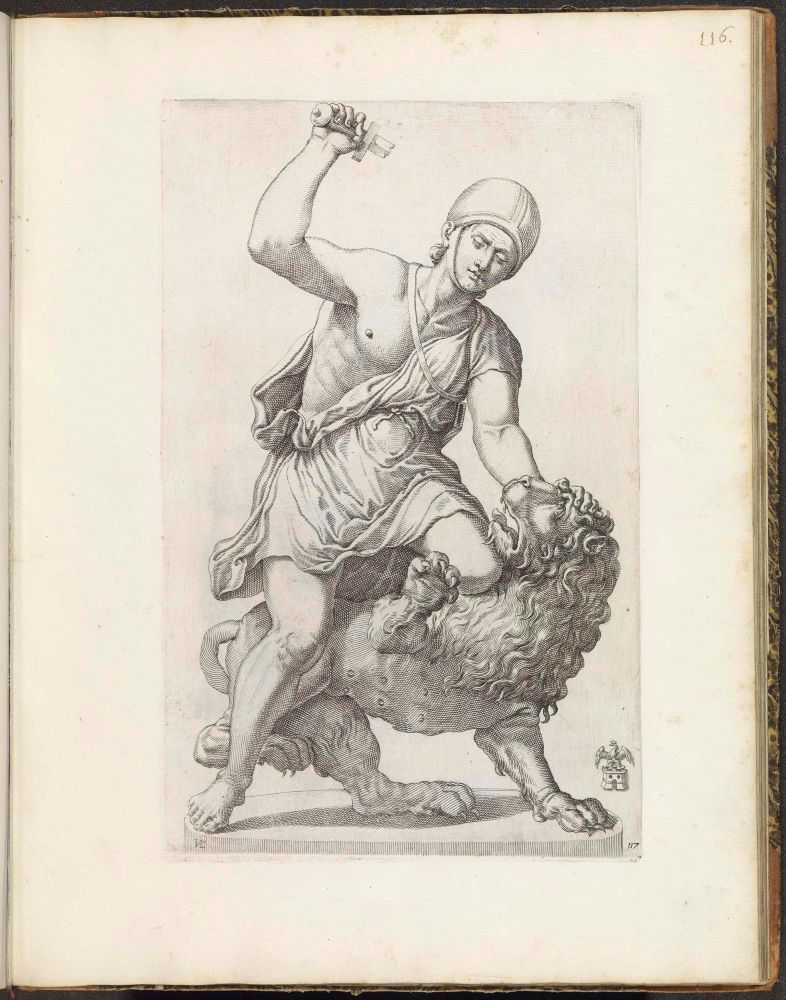
Bite marks found on the skeleton of a possible gladiator /slave who fought in England are thought to have been made by a large cat – most likely a lion. Actual gladiator remains are relatively scarce in the archaeological record — and in Britain specifically, which was occupied by the Romans from the first through fifth centuries, there has so far been no confirmed evidence of human-animal combat.
The victim was buried sometime between 200-300 CE, near the Roman city of Eboracum, which is now York. This site contains the remains of mostly younger men, often with evidence of trauma, which has led to speculation that it could be a gladiator burial site. This specific skeleton has a series of depressions on the pelvis, which had previously been suggested as possible evidence of carnivore bites. By creating a three-dimensional scan of these marks, the researchers on this new study could compare these marks to bites from a variety of different animals.
They determined that these marks were likely bite marks from a large cat, possibly a lion. Since they were on the pelvis, they note it’s possible that these bites came as a result of the lion scavenging on the body around the time of death.
This skeleton is the first direct, physical evidence of human-animal combat from Europe during the Roman Empire. By demonstrating the possibility of gladiatorial combat or similar spectacles in modern York, this finding also gives archaeologists and historians new insight into the life and history of Roman-era England.
Lead author Prof. Tim Thompson, of Maynooth University, explained:
“The implications of our multidisciplinary study are huge. Here we have physical evidence for the spectacle of the Roman Empire and the dangerous gladiatorial combat on show. This provides new evidence to support our understanding of the past.”

Co-author Dr. John Pearce, of King’s College London, added:
“As tangible witnesses to spectacles in Britain’s Roman amphitheatres, the bitemarks help us appreciate these spaces as settings for brutal demonstrations of power. They make an important contribution to desanitizing our Roman past.”
Click on this link to access, Unique osteological evidence for human-animal gladiatorial combat in Roman Britain, published in PLOS one.
Work began in 2004, when the first skeletons were excavated at the 1800-year-old Roman cemetery, along the Roman road leading out of York to Tadcaster.
Professor Tim Thompson, from Maynooth University, Ireland, said:
“For years, our understanding of Roman gladiatorial combat and animal spectacles has relied heavily on historical texts and artistic depictions. This discovery provides the first direct, physical evidence that such events took place in this period, reshaping our perception of Roman entertainment culture in the region.”
The skeleton, a male aged between 26 and 35, was buried in a grave with two others, and overlaid with horse bones. In life, he appears to have had some issues with his spine that may have been caused by overloading to his back, inflammation of his lung and thigh, as well as malnutrition as a child, which he recovered from.
Analysis of the skeleton points towards this being a Bestarius, a gladiator role undertaken by volunteers or slaves.
DIG: An Archaeological Adventure in St Saviourgate will host the skeleton as part of its Roman exhibition, which includes a reconstruction of the gladiator’s face.
David Jennings, CEO of York Archaeology, said:
“One of the wonderful things about archaeology is that we continue to make discoveries even years after a dig has concluded, as research methods and technology enable us to explore the past in more detail; it is now 20 years since we unearthed 80 burials at Driffield Terrace.
“This latest research gives us a remarkable insight into the life – and death – of this particular individual, and adds to both previous and ongoing genome research into the origins of some of the men buried in this particular Roman cemetery.
“We may never know what brought this man to the arena where we believe he may have been fighting for the entertainment of others, but it is remarkable that the first osteo-archaeological evidence for this kind of gladiatorial combat has been found so far from the Colosseum of Rome, which would have been the classical world’s Wembley Stadium of combat.”
In another new publication, jewellery found in a Roman treasure hoard found in Thetford Forest, East Anglia, indicates that Thetford was pagan until the 5th century, which is longer than previously believed.
The Thetford treasure was first found by a metal detectorist trespassing on a construction site at Fison’s Way on Gallows Hill, Thetford in 1979. It consisted of 81 objects, including 22 gold finger-rings, other gold jewellery, and 36 silver spoons or strainers. It is now in the collections of the British Museum and can be seen on display there.
The author of the research, Professor Ellen Swift of University of Kent, argues that there is compelling evidence that the treasure was buried in the 5th century rather than the late 4th.
She explained:
“Since wider evidence found at the site confirms the religious context previously established by inscriptions on the spoons within the hoard, this means, remarkably, that the re-dating of the Thetford hoard suggests a pagan cult centre survived there into the 5th century.
“The site’s economic assets, indicated by the value and variety of the hoard, also show that it may have wielded significant power and authority locally.”
This new chronology is supported by detailed comparisons of multiple objects (both spoons and jewellery) with context-dated finds from continental Europe, and with objects from the 5th century Hoxne hoard in the British Museum, which was found more recently than the Thetford hoard and contains many similar items.
The Thetford jewellery especially is highly varied in style, suggesting the different pieces originated in different places. Some of the latest-dating finger-rings in the hoard likely originated in northern Italy or adjacent regions, and the necklace with conical beads from the Balkans area of Europe.
Most of the jewellery is generically ‘Mediterranean Roman’ in style illustrating a geographically widespread shared culture among elites.
Click on this link to access, Rethinking the date and interpretation of the Thetford treasure: a 5th-c. hoard of gold jewelry and silver spoons, published in Journal of Roman Archaeology.
The Orkney News has many articles covering the most recent research into the period of the Roman Empire including the destruction of sites due to Israeli bombardments now taking place in Gaza. Use the search button to find out more.

Fiona Grahame



Leave a Reply