
At its height, the ancient Roman Empire sprawled across three continents, encompassing the entirety of the Mediterranean and the lives of tens of millions of people across Europe, the Near East and North Africa.
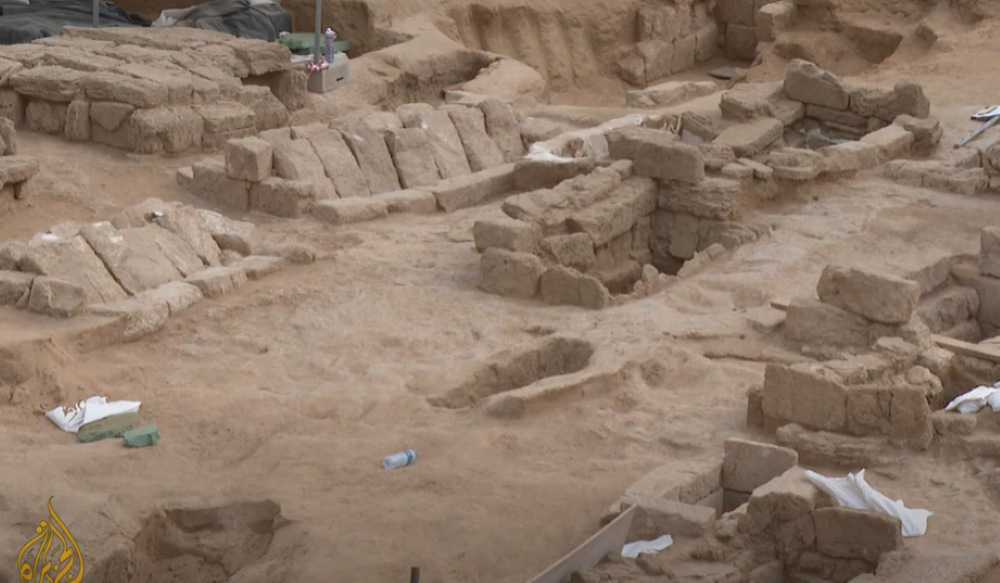
During work to construct housing in Gaza in 2022 134 graves from the Roman period were uncovered. The site is an incredible discovery and demonstrates the importance and wealth of Gaza during the Roman period of 1st Century BC and the 2nd century AD.

Gaza was a vital trading link across the Mediterranean. The cemetery is located near to what was the bustling port of Anthedon, and covers an extensive area.
Anthedon represents a clear example among the seaports along the Eastern Mediterranean coast, demarcating the ancient trade route that linked Europe with the Levant during Phoenician, Roman, and Hellenistic periods. Abundant archaeological evidence provides a complete and comprehensive picture of the historical and archaeological evolution in the region, which reflects the rich socio-cultural and socio-economic interchange between Europe and the Levant. The presence of massive earthen structure in the proximity of the sea as well as the rich underwater heritage, still to be explored, make Anthedon an excellent site for nomination to the World Heritage list.
The sweet wine of Gaza was much desired by the Romans and would be one of many items traded along this route.
The 2,000 year old site is located in the town of Jabalia, north of Gaza City and local Gazans led by archaeologists were uncovering the fascinating tombs and graves. The site is of international importance, evidence of the ancient history and heritage of Gaza. Today it is one of over 70 sites recorded by UNESCO as being under threat, damaged or destroyed by the Israeli bombardment of Gaza. Many ancient buildings and treasured artefacts in Gaza have either been obliterated or looted since October 2023.
The cemetery is about a mile from the ancient Mediterranean city of Anthedon, which was once inhabited by Romans. The area has a rich history that stems from its involvement in ancient trade routes between Levant and Egypt. Alongside the 125 tombs that have been discovered, there have also been two rare sarcophagi that are made out of lead. One of these sarcophagus was decorated with images of grapes, while the other was decorated with images of dolphins. – Ancient Roman Burial Site Discovered in Gaza
Fadel al-Otol who was leading the team of archaeologists told the news agency Al Jazeera:
“Gaza holds a place of historical significance as one of the world’s oldest cities for its strategic geographical location at the intersection of the Asian and African continents.”
These archaeological findings show the historical roots and Palestinian heritage, which extend over thousands of years, debunking all narratives propagated by the Israeli occupation that portray Palestine as a land without a people and a people without a land.”
The excavations in 2022/23 were being hampered by the blockade of Gaza by Israel and limited financial resources. The excavation and restoration work was being funded by the British Council’s Fund for the Protection of Culture.
The fate of this wonderful site of international importance is unknown.
As of 29 November 2024, UNESCO has verified damage to 75 sites since 7 October 2023 – 10 religious sites, 48 buildings of historical and/or artistic interest, 3 depositories of movable cultural property, 6 monuments, 1 museum and 7 archeological sites.





Leave a Reply