
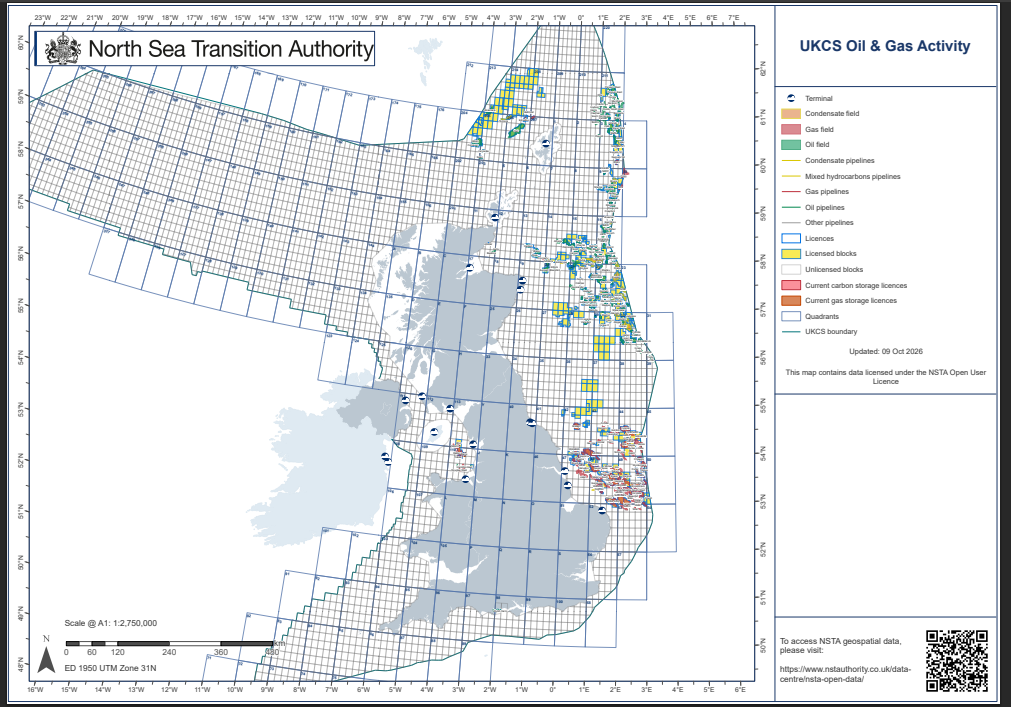
“Following careful consideration of all relevant factors I have agreed that the regulator can grant consent for gas to be produced at Jackdaw, which will begin to supply the UK with gas from this winter thanks to the highly skilled and vital North Sea workers.” – Miatta Fahnbulleh, Energy Secretary in the UK Labour Government.
This week UK Labour Prime Minister Andy Burnham announced that gas is to be produced at the Jackdaw field, off the coast of Aberdeen, Scotland.
According to the statement issued by the UK Government, Jackdaw will start to supply gas to British homes and businesses from the end of this month and is expected to increase domestic gas production by around 6% at its peak – supporting the UK’s gas supply over its lifespan of up to 11 years, boosting the UK’s “energy security, protecting hundreds of jobs and adding an estimated £2.9 billion to the UK economy.”
At the same time the UK Government also announced the creation of a “new Energy Wealth Fund, which will use tax revenues from North Sea oil and gas to invest in renewable and low carbon energy projects and support the green transition.”
UK Energy Secretary Miatta Fahnbulleh said on Wednesday, 21 October when making the Jackdaw announcement that :
“This decision will support the country’s energy security with homegrown gas this winter and help minimise the UK’s use of imported higher emission fuels as we continue our transition to renewables and nuclear.
“The decision is compatible with our legally binding climate commitments, and we remain resolute in ending new licences for oil and gas and achieving net zero by 2050.”
Readers in Scotland will recall that one of the arguments used by Better Together, a consortium of the main UK political parties – Conservatives, Labour, and the Liberal Democrats – during the 2014 Referendum was that Scotland was too poor to be an independent nation.
There was a quick response from First Minister of Scotland, John Swinney who welcomed the decision for gas production from Jackdaw , however, instead of pooling and sharing out the income to the whole of the UK (over 70 million people) in Burnham’s ‘Energy Wealth Fund’, he wants to see the income which is produced in Scotland (5.5 million people) from its oil and gas fields to be used for Scottish communities.

Norway, having found oil in its waters, and a mere fraction of what is in Scotland’s, soon realised it needed to set up an oil fund, so that its nation and people would benefit from its natural resources.
The aim of the fund is to ensure a long-term management of revenue from Norway’s oil and gas resources, so that this wealth benefits both current and future generations. The fund’s formal name is the Government Pension Fund Global. –Norges Bank
Today the fund the world’s largest single investor. Each year, the Norwegian government can spend only a small part of the fund, but this still amounts to almost 20 percent of the government budget.

The UK Government decided not to create a wealth fund when oil and gas was first discovered offshore , but it does take in £billions in revenues from Oil and Gas production.
Government revenues from oil and gas production October 2026 – oil and gas tax revenues over the 6 financial years from 2020 to 2021 to 2025 to 2026. Total net revenues alongside payments and repayments for the individual taxes.

Since that official publication, the US/Israel war of choice with Iran was launched plunging the world into economic uncertainty and surging the prices of Oil and Gas. For a few of the wealthy, huge profits are pouring in, but for consumers, it’s making what was already a cost of living crisis , even worse.
For Scots, who are facing another winter of choosing between heating and eating it is cold comfort that Jackdaw will be boosting the coffers of the UK Treasury.
Professor Paul de Leeuw (Robert Gordon University) reminded the Scottish Parliament’s Economy, Tourism and Energy Committee on 22 September that from “Covid-19, to what happened when Russia invaded Ukraine, the sabotage of the Nord Stream pipeline, tariffs and the conflict in the middle east, there has been huge volatility in global energy markets.“
And he continued:
“There are only two countries in Europe that provide significant quantities of oil and gas: the UK and Norway. Norway does not use its own oil and gas; everything is exported. However, it uses the proceeds from oil and gas to accelerate its renewables industry, which has been hugely successful.”
…“The UK uses about 2.5 million barrels of oil and gas per day, and we produce about 1 million barrels per day.“
Paul de Leeuw said that in Scotland 1 in 30 people work in or support the offshore energy industry – in Aberdeen/Aberdeenshire that figure is 1 in 6 (perhaps even 1 in 4). Jobs are a huge issue for the North East of Scotland when they are now so dependent and tightly entwined in the Offshore Industry. For the SNP Scottish Government, the reasoning for having a Wealth Fund for Scotland with its much smaller population and the number of those depending on the Offshore industry, as opposed to it draining south to be shared to the whole of the UK, is clear to see.
For the UK Government, although Prime Minster Andy Burnham may go on about being in favour of devolution – that does not include ensuring Scotland has the sole benefits from the revenues which will be generated from the Jackdaw gas production off the coast of Aberdeen. Those are to remain with the whole of the UK.
Whilst many political parties across Scotland, and in the UK are in favour of exploiting the gas from Jackdaw, the Scottish Greens have come out firmly against production referring to the decision as ‘climate vandalism.’
The Greens argue that the production of gas at Jackdaw will not cut our household energy bills and that “Jackdaw will have no meaningful impact on the UK’s energy security. Over its roughly 10-year lifetime it will provide only 2% of UK gas demand.“
The website Uplift, has produced its data on Jackdaw (owned by Adura, a joint venture between Shell and Equinor):
- Jackdaw, a relatively small gas field, would have no meaningful impact on the UK’s energy security, providing just 2% of UK gas demand over its roughly 10 year lifetime.
- It will also have no impact on our energy bills, which have risen as a result of the increase in wholesale gas prices, driven by the ongoing conflict in the Middle East.
- Largely unmanned and remotely operated, Jackdaw won’t stop the decline in North Sea jobs, which have more than halved over the past decade as the basin matures.
- No new oil and gas fields are compatible with safe climate limits – existing global oil and gas reserves already far exceed what can be safely burned. If approved, the huge Rosebank oil field would release emissions equal to 70% of the UK’s annual total, making it incompatible with the UK’s climate commitments and the defining test of this government’s credibility on climate change.
Scottish Greens co-leader Ross Greer said:
“Labour’s decision to approve Jackdaw is climate vandalism. It is a devastating betrayal of our children’s future and it won’t even lower energy bills in the here and now.
“Andy Burnham’s Government had the opportunity to reject the greed of oil and gas companies. They could have focused instead on lowering bills and protecting our planet by investing in clean, green renewable energy. Instead, this Labour Prime Minister has caved in to the fossil fuel lobby and continued to devastate our climate.
“The UK has just endured a summer of repeated heatwaves and devastating wildfires. This winter we’ll likely see extreme levels of flooding. The climate emergency is here already and it’s costing lives.
“Jackdaw will make the UK even more dependent on gas despite its wildly fluctuating prices in the global market. That will do absolutely nothing to lower household energy bills and it is dishonest to pretend that it will.
“Labour’s climate credentials are now in shreds. Families across the country are struggling to afford the rising costs of heating their homes. The money being thrown at oil and gas companies in the form of tax breaks should instead be used to insulate homes and help people swap out their gas boilers for heat pumps.”
And he continued:
“Scotland has a huge wealth of clean, green renewable energy sources, but we are constantly held back by Westminster. The UK Government has once again bent to the whim of the fossil fuel lobbyists who only care about making obscene profits for their shareholders, regardless of the ruin they are leaving for everyone else.”
The latest renewable generation statistics for Scotland are as follows:

As of the end of June 2026, there were 1,253 renewable energy projects with an estimated capacity of 99.4 GW in the planning pipeline in Scotland. Of these there were:
- 426 electricity storage projects with an estimated capacity of 43.9 GW;
- 768 renewable electricity generation projects with an estimated capacity of 51.6 GW; and
- 58 other renewable energy technologies projects with an estimated capacity of 3.8 GW.
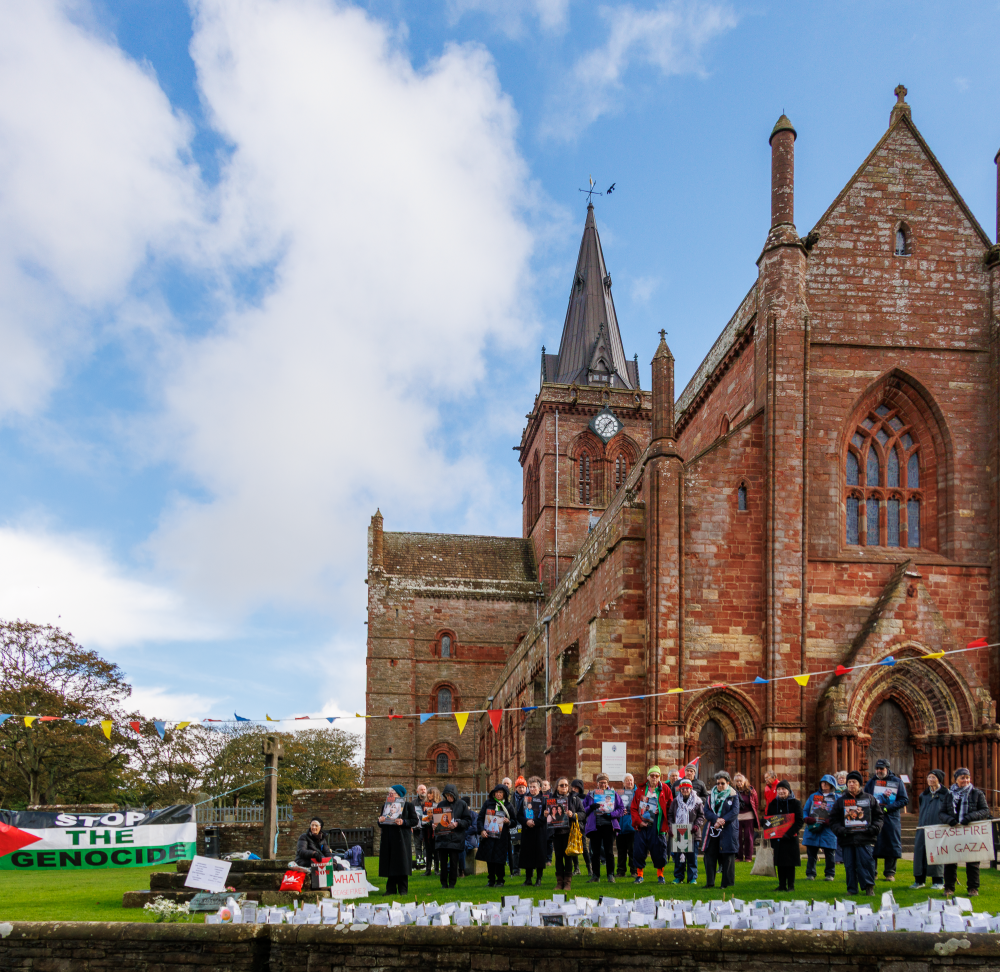
People in Orkney, and across huge swathes of rural Scotland, can see these developments happening within their own communities. The energy generated is fed into the National Grid, and Scotland buys it back. It is an outdated system unsuitable for the 21st century, where the areas which produce the energy also pay some of the highest prices, as it favours those with the highest density of population.
Will gas production at Jackdaw bring down energy bills in Orkney ? – highly unlikely.
Will gas production at the automated Jackdaw field protect or event produce substantial numbers of jobs in the North East of Scotland ? – very doubtful.
Are we in a climate crisis ? – Yes.

“Now is the time to move forward at pace and we welcome the government’s approval in allowing us permission to consider a small number of cases that meet the TEC criteria ahead of forthcoming legislation.” – NSTA grants consent for Jackdaw, NSTA Chief Executive Stuart Payne.
Fiona Grahame.
Leave a Reply