
Since October 2023 Gaza has sustained such catastrophic bombardment by the Israeli military that 97 % of its trees are gone. The devastation has resulted in 95% of shrubland and more than 80 % of annual crops, destroyed.
Inger Andersen, Executive Director of the UN Environment Programme (UNEP), said:
“Freshwater and marine ecosystems are polluted by munitions, by untreated sewage and other contaminants.
“Over 61 million tonnes of debris must now be cleared, with sensitivity to avoid further contamination.”
She was speaking at the International Day for Preventing the Exploitation of the Environment in War and Armed Conflict.

On 23 September 2025 The Environmental Impact of the Conflict in the Gaza Strip was published. The report highlights key environmental issues which will impact any recovery the survivors of the Gaza Genocide are struggling to achieve, and it has key recommendations to support the recovery.
Fresh water has been contaminated by sewage and ammunitions. Production of food on any kind of scale necessary is not possible because of the extensive destruction of farmland and crops. More than 61 million tons of debris from destroyed buildings and other infrastructure will require clearing, sorting and recycling or disposal – some of which is contaminated with asbestos, and industrial chemicals and wastes. Under a lot of that rubble are human remains. These must be recovered with sensitivity, attempts to identify them, and give them the humanitarian burial denied them during the Genocide.
The bombing and destruction of buildings has produced dust to such a level that there has been a significant increase in people with respiratory problems. In the month of June this year 37,000 cases were reported.
And then there are the tons of unexploded ordnance to be cleared.
The environmental damage is a crime to Gaza, and to our whole planet.
None of this can be dealt with to the extent necessary whilst bombs continue to be dropped.

Farming their own lands which they had held for generations not only fed the people of Gaza but meant that products could be exported, bringing in much needed income to the region. Farming in Gaza was a success. The actions of Israel to obliterate the agriculture of Gaza has ensured that people have to rely on the limited food relief that arrives.
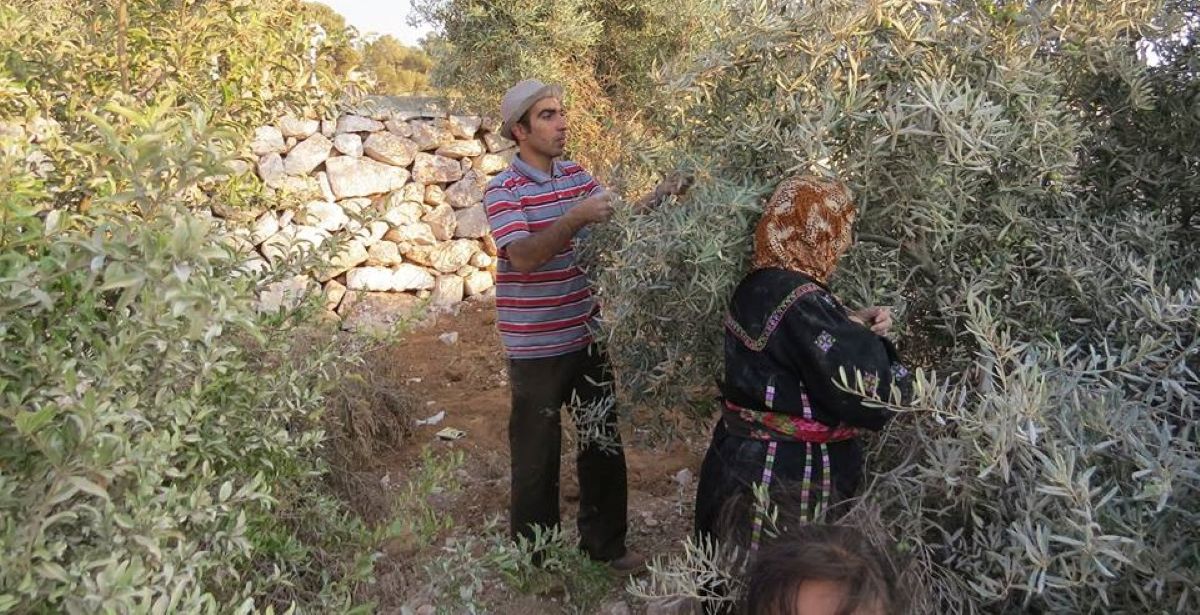
Israel is continuing this strategy in The West Bank where the olive trees – an iconic plant for Palestine – are being uprooted, bulldozed to make way for Illegal settlers, many of whom have arrived from the US.
100,000 Palestinian families in Gaza and the West Bank depended on olive cultivation for their livelihood, including production of olives for pickling, olive oil, and traditional oil-based products like soap. Olive and olive products contributed around 5% of the Palestinian territories’ GDP and 20% of economic output. Gaza accounted for about one-third of olive production, the West Bank for the rest. – No Olive Branch :Natural Resource Destruction in Gaza and The West Bank.
Many women are employed in the manufacture of products from the fruit of the Olive Trees bringing in much needed income especially from FairTrade sales. The Olive Tree is also central to Palestinian culture. The Illegal settlers migrating from the US and other Western countries into Palestinian land have no such bond or heritage of any kind.
In 2019 Palestinian farmers visited Orkney to tell their stories about their love of farming and how important it is.

It is crucial that in its recovery the farmers of Gaza must be enabled to plant and tend their olive trees, and that the continued uprooting of trees in The West Bank must cease.
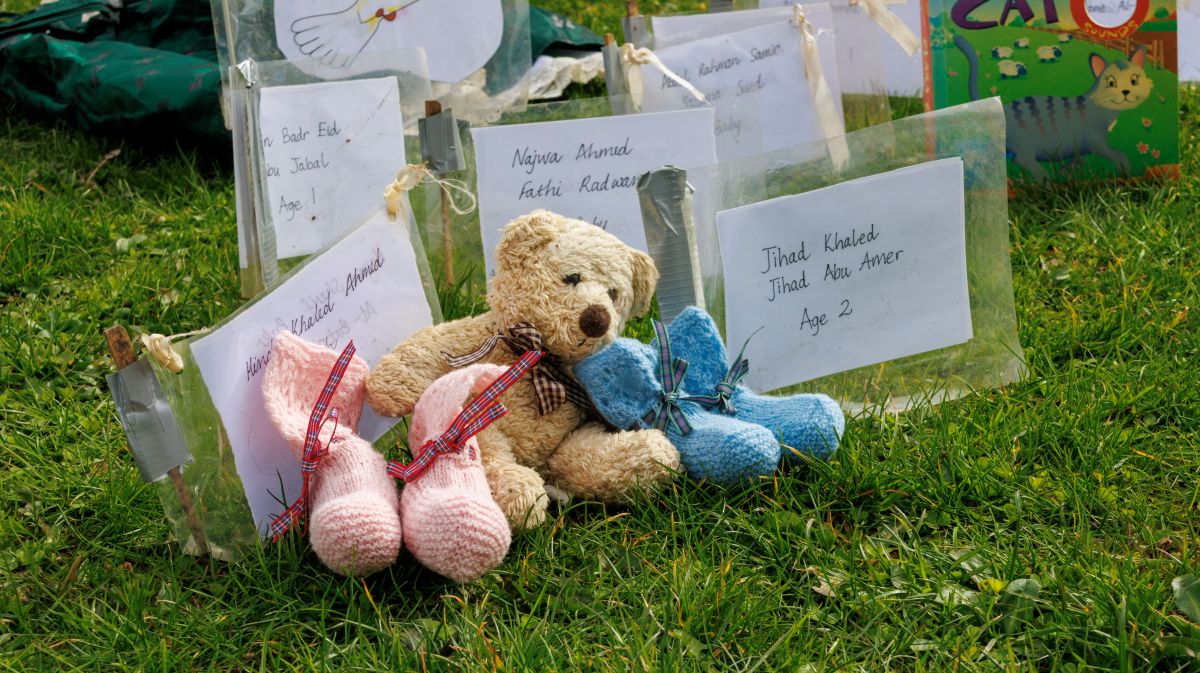
Islanders in Orkney will again meet on the Kirk Green, St Magnus Cathedral, Kirkwall, on Saturday 8 November between 1 and 2pm. The vigil now in its third year has been peacefully campaigning for a permanent ceasefire. On sale at the vigil are Palestinian products brought there by Bryan Milner. All these goods are FairTrade and help to support Palestinian farmers and children’s charities.
Click on this link for the online shop, Zaytoun.
Click on this link to download the Environmental Impact of the Escalation of Conflict in the Gaza Strip:
Fiona Grahame




Leave a Reply to ArtyHettyCancel reply