
First published in different form, The Herald, August 2001, and in longer anecdotal form in ASTRA Spacereport, September 2001.
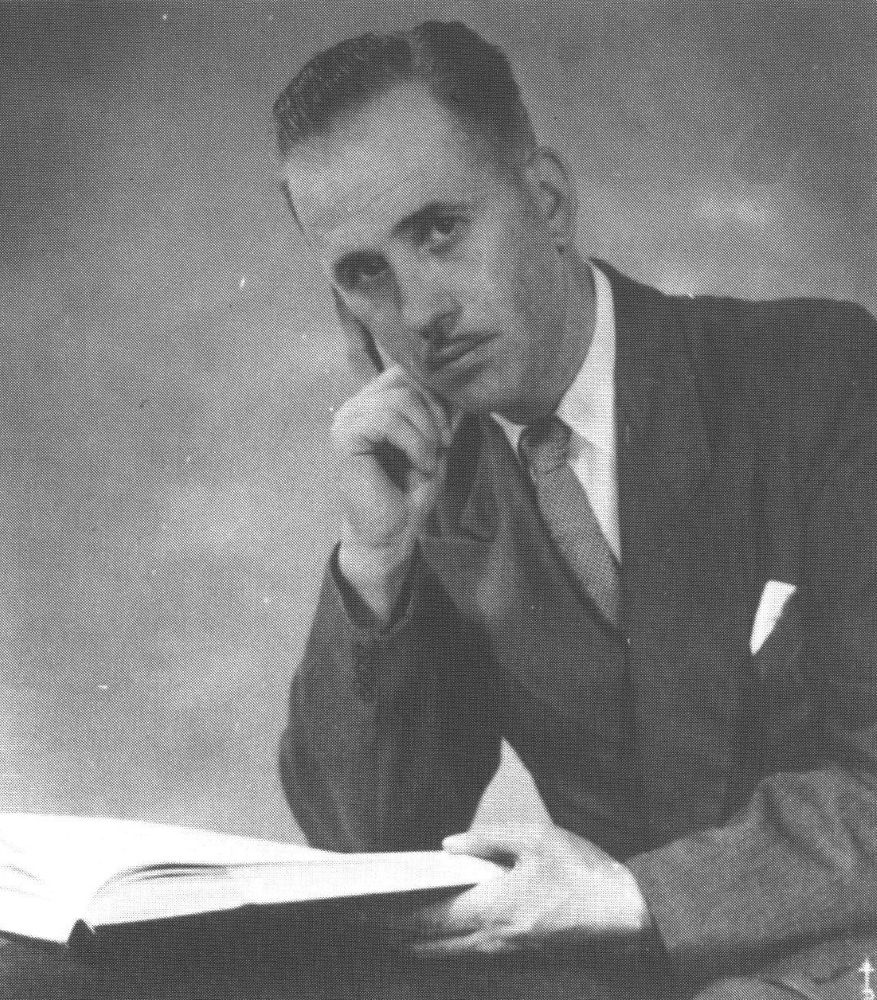
In ‘Space Debris, Part 1′ (ON, 13th July, 2025), I mentioned the late Prof. Oscar Schwiglhofer, the founder of the Scottish spaceflight society ASTRA, originally as a Scottish Branch of the British Interplanetary Society in December 1953. Of his appearance as a speaker at the Unispace 82 conference in Vienna, I said that it was ‘ a story worth telling at another time’. Another reason for doing so now is that my Herald obituary of him, in the online archive Researchgate, was accessed from Italy seven times in succession shortly before that; I don’t know why, and nobody has contacted me about it, but it seems like a good moment to put his story on wider record.
Oscar George Lewis V. Schwiglhofer, or ing Schwiglhofer when he used his professional title as an engineer, was born in Transylvania in April 1923, to a wealthy and powerful family. At a party in his home on the night of the Moon landing, he produced a shoe-box of photographs including the mansion in which he grew up. Their interests included property on the Danube and he told me that their status derived from extracting tribute from passing boats on the river:
“We didn’t need cannon, we could just drop the cannon-balls over the ramparts.”
When the Moslem advance into eastern Europe was halted, Oscar’s family signed the peace treaty along with neighbouring heads of state, because part of the deal was that an island in the Danube which they owned would become a Turkish state. At the outset of World War 2 the treaty was encased in a steel cylinder and buried with other treasures in caves on the estate. Oscar sometimes dreamed of going back to retrieve it, especially after the Romanian authorities repatriated the Turks, dammed the river and flooded the island, for which in theory he was entitled to compensation. But he knew the document was unlikely still to be there because German and later Soviet occupying troops had searched the caves with metal detectors.
There was also the problem that having in effect been made stateless by the Communist takeover in Romania, after the war, Oscar in due course became a naturalised British citizen. In the section of his passport requiring assistance and protection from all the powers and principalities of the Earth, a red rubber stamp added ‘Except Romania’. If he went back there (as he did, clandestinely, at least once), the Foreign Office would have nothing to do with it nor with him, if he got into difficulties.

Oscar’s academic studies were interrupted by the occupation, but his family’s mining business served as a cover for his activities in the Resistance, in his late teens and early twenties (Fig. 1). Oscar’s group had special responsibility for destroying downed Allied aircraft, particularly code books and radar – not for saving the aircrew, which was another team’s task. There was a poignant moment in 1979, during the opening of the Prestwick Air Show by the astronaut Pete Conrad. The Show was sponsored by The Daily Record, and the late Chris Boyce had arranged for Oscar and me to meet Conrad at the Hospitality Tent, to ask him to open ASTRA’s ‘High Frontier’ exhibition in a few weeks’ time. (Other commitments prevented him from doing so.) As the Battle of Britain Flight came over, filling the air with the distinctive sound of Merlin engines, I noticed a strange expression on Oscar’s face.
“That must be a familiar sound to you,” I remarked.
“By God it is,” Oscar replied. “So that’s what they look like.”
He had often heard RAF aeroplanes overhead in the dark, and seen them in pieces on the ground, but never intact and airborne in daylight.
Later Oscar’s group were responsible for the transport of partisans’ families out of danger in Jugoslavia, and the code name for the operation was ‘Count Dracula is coming to Transylvania’, because Jugoslavia was the true home of the vampire legend. His family’s mining business served as a cover for his activities in the Resistance, because he was licensed to transport explosives. He seized several opportunities for spontaneous acts of sabotage, which included blowing up his own car after it was commandeered at an SS roadblock, and he destroyed an ammunition train by a trick with a cigarette end and a box of matches which later featured in a Hollywood movie.
On the Moon landing night, Oscar amazed us with photographs of a trainload of Tiger tanks, intended for the Russian front, but lying on its side while he posed like Lawrence of Arabia on top of it. He had blown the track on a bend above a gorge, intending to put the train down it; although it was going too slowly for that, the weight of the tanks broke their axles and they had to be returned to Germany. But not all of his exploits were successful: several members of his family were shot as hostages, and his name appears in the roll of Righteous among the Nations, Gentiles who tried to intervene in the Holocaust. In Oscar’s case that was for a spur-of-the-moment rescue attempt which resulted in the deaths of the Jewish slave labourers concerned.
His old friend, the artist Ed Buckley (see obituary, ON, May 15th 2022), wrote in his own tribute to Oscar,
“It was hard to imagine the ‘little old man’ seen in Glasgow’s Union Station as blowing up a car containing six SS men, or putting four young thugs to flight when they had thought him ‘an easy touch’ one night in Hamilton – but that was Oscar!”
More experienced fighters took the measure of Oscar quicker than I had, when I first met him at the BIS in 1962. The late David Proffitt, RN, who had been in street fighting in Aden and Northern Ireland, remarked,
“I wouldn’t get into a boxing ring with Oscar even if I was carrying a submachine gun. I might miss with the first burst, and he wouldn’t let me get a second one off.”

Before the War Oscar studied physics in Mediash under Prof. Hermann Oberth (Fig. 2), himself from Transylvania and one of the three pioneers who independently worked out the basic theories of astronautics in the early years of last century (the others being Konstantin Tsiolkovsky, in Russia in the 1890s but not published till the 1920s, and Robert Goddard in the USA, who published just after Oberth). The appearance of Oberth’s Die Rakete im Interplaneten Raumen, (“The Rocket into Interplanetary Space”) in 1924 led to the formation in Germany of the Verein für Raumschiffart as one of the world’s first spaceflight societies, and so to the German rocket programme which was taken over by the Army, and then by the USA after the War. Oscar became determined to found another.
In the late 1940s Oscar took an engineering degree at the University of Vienna, supporting himself by translating mining laws from Hungarian to replace those the Germans had dispensed with. He also took part in bomb disposal in the mines, clearing them of booby-traps left by the departing occupiers. He then moved to Scotland and settled in Lanarkshire. At first he had a small business repairing electrical equipment, but was forced to quit by repeated burglaries. He married Margaret Cameron, from Strontian, and worked as a design engineer first with Singer in Clydebank and then with Philips in Hamilton, for whom he designed and installed a number of automated production lines which were considered revolutionary for their time in the late 1960s.

Oscar was active for a time with the Scottish National Party in Hamilton, and was one of the ‘back-room boys’ behind Mrs. Ewing’s victory over Labour there; but throughout, his true love remained spaceflight and astronomy. He met Hermann Oberth again at the International Astronautical Federation Congress in London, in 1951 (Fig. 3), and Oscar renewed his resolve to found a spaceflight society as Oberth himself had done. While conducting his own research at Airdrie Public Observatory, he corresponded with BIS Secretary Len Carter about founding a Scottish branch of the British Interplanetary Society.
In 1953 he began a campaign, putting cards into scientific books in local libraries, obtaining the BIS membership list and writing to members in Scotland, proposing meetings. On December 13th, twelve BIS Scottish members met at Kelvingrove Art Gallery & Museum, a committee was set up and Oscar was appointed Convener. The branch was opened by Len Carter on January 17th 1954, but the BIS Council was not enthusiastic about it and it remained the ‘Informal Scottish Branch’ or ‘Provisional Branch’ for nearly ten years. Early meetings were held in Glasgow and Edinburgh, with Dr. Archie Roy, as he then was, as an active participant. After Archie Roy’s appointment as Lecturer in Astronomy in 1958, meetings moved to the Glasgow University Observatory on University Gardens (Fig. 4), now the site of the ‘new’ Queen Margaret Union.


In 1956 Oscar researched the former site of Sir Thomas Brisbane’s Mackerston Observatory outside Largs (Figs. 5 & 6 – see ‘Archaeoastronomy from the Air’, ON, July 17th, 2022), and in April 1957 he met the late Andy Nimmo at the Boy Scouts’ display at the Boys and Girls’ exhibition in Kelvin Hall, at a spaceship stand designed by Andy. Around that time Oscar designed the instruments for the Glasgow University contribution to ‘Moonwatch’ satellite tracking team, a worldwide project to record the first artificial satellites (Fig. 7), with the initial equipment supplied by Charles Frank Limited. Moonwatch meetings headed by Dr. Roy continued through to 1961, and observations totalled over 100.

In September 1962, as Branch Vice-Chairman, Andy Nimmo launched the ‘Space & Scotland’ project, to produce a report on the effects of international space programmes on Scottish industry, for the Scottish Industries Exhibition the following year. Despite a strong start, by April 1963 there were severe problems. The BIS had invoked a bye-law requiring all correspondence to be handled by the London Secretary, and was insisting that the project be stopped. There wasn’t even the prospect of transferring the work to London because it was going too well, generating too much correspondence for London to handle. As the project was for the benefit of Scotland, this attempt to shut it down was not well received.
At the Annual General Meeting in June dissolution was discussed, and in September the ‘Space & Scotland’ project declared itself independent of BIS Scottish Branch. An October meeting recognised that the Scottish Industries Exhibition deadline could no longer be met. The idea was not forgotten and was revived several times later, particularly in meetings at the High Frontier exhibition at the Third Eye Centre in Glasgow, 1979. In 2016-17 Gerry Cassidy and I revived the title, with Andy Nimmo’s approval, for four sponsored issues of a magazine (Fig. 8).

At the October 1963 meeting, discussions began on forming an entirely new society. A constitutional committee was set up, including Margaret Schwiglhofer, Tom Dutton, Drummond Mansbridge and myself, to work out the basis for the new society. We were determined that it shouldn’t simply duplicate the activities of the BIS, and the stated aims emphasised stimulating public interest in all aspects of space research, ‘and all subjects relating thereto’, as well as to engage in practical research if we could. After the acronym ‘ASTRA’ was suggested by Oscar and agreed, the name thrashed out was ‘The Association in Scotland for Technology & Research in Astronautics’. The ASTRA Constitution was adopted in November and regular meetings began in January 1964. ASTRA applied for affiliation to Glasgow University Union and began meeting there monthly in Room 4, with monthly Council meetings hosted by Oscar and Margaret in Hamilton.
In January 1967 Oscar launched ASTRA’s magazine, Spacereport, intended as a monthly newsletter. The first two issues reproduced press cuttings, the third was a print-out of Oscar’s simulated Moon-landing on the Strathclyde University computer. However, the next issue wasn’t to appear until 1969, as part of the Interstellar Project. Spacereport appeared quarterly (or so it was intended) until 2003, joined in 1978 by an occasional journal, Asgard (Fig. 9).

By 1967 ASTRA had undergone a major change of format and was primarily a student society, but for some reason, it wasn’t gaining any more student members. What would happen when the present ones graduated? Oscar and I worried about this and Oscar tried (without success) to find another venue outside the University. I felt that a major project for publication was the answer, and in discussion with Ed Buckley, Archie Roy and others, I formulated ‘The Interstellar Project’, extending the powerful format of ASTRA discussion meetings into a series intended for book publication. The topic was to be ‘The first phase of interstellar colonisation, out to 12 light-years’. Part 2 was later added to cover ‘Contact with Other Intelligence’, and in 1974 the book was published as Man and the Stars, illustrated by Ed Buckley and Gavin Roberts, dedicated to Oscar “for more than twenty years’ effort furthering public interest in space research” (Fig. 10). At Oscar’s request, in 1978 the next book, New Worlds for Old (Fig. 11), was dedicated to Hermann Oberth, who by then was ASTRA’s first Honorary Member.


Meanwhile by 1969 the old Observatory had been demolished to make way for the new QM, our other venue, Green’s Playhouse, was no more, and our GUU affiliation had lapsed. Oscar leased meeting rooms from Hamilton District Council, which became a lecture room, workshop, kitchenette and outside toilet, on the first floor, 189 Almada Street, Hamilton, at Peacock Cross.

The lecture room was decorated with a beautiful mural by Ed Buckley of the star clouds in Scorpius (Fig. 12), and a series of work meetings ensued. Weekly meetings began at the Hamilton rooms in October 1970, but in February 1971 we were required to quit the rooms, allegedly for safety reasons but actually because we were on the floor above the SNP’s prime site at Peacock Cross, and Labour had regained the town at the election only days before. Oscar arranged for us to meet successively in a derelict shop nearby called ‘Bruce’s Cave’, new rooms in Guthrie Street, (The Hamilton Advertiser ran the headline ‘Spaceflight Society Moves from Cave to New Premises’), to British Rail property, to various rooms in Brown Street and finally back to Almada Street at No.49, where meetings continued until the end of 1982. When Hamilton meetings ended and we gave up the rooms, during the removal Oscar came into Glasgow with me to witness midwinter sunset at the Sighthill stone circle (Figs. 13 & 14), the first time it had been observed since the building of the circle in 1979. (See ‘Sighthill Observations’, ON, April 10th, 2022.)


Another dream of Oscar’s, from the outset of the Society, was to build a radio telescope and satellite tracking station, and in 1973 he became head of a Technical Section for the purpose. His first set-up was built for Project GOLDE (Ground Observation of Long Delayed Echoes), organised by the late A.T. Lawton of the BIS. A full tracking station was built with ASTRA’s share of the book royalties, but it was destroyed twice, first by vandals in a break-in. Oscar and I rebuilt it in the summer of 1983 in a more advanced form, using components from a radar aerial donated by the Civil Aviation Authority on the closure of the Traffic Control centre at Western Gailes, but it was then felled by a hurricane before it became operational. The increasing demands of looking after Margaret, for whom he had become a full-time carer, made it impossible for him to do more, and by her death in 1994 it was too late.

In 1977 the Society took over running Airdrie Public Observatory on behalf of Monklands (now North Lanarkshire) District Council, after severe damage in a storm (Fig. 15). A new dome was installed by the District Council, while the telescope was restored by ASTRA members. During the process Oscar’s research notes from 1953 were rediscovered. The observatory was reopened by Prof. Vincent Reddish, Astronomer Royal for Scotland, on October 4th (the Sputnik anniversary) in 1978 (Figs. 16-18).


Oscar had carried out major repairs to the clockwork drive, which he restored again for the centenary of the Observatory in 1995. The Observatory was badly affected by light pollution and one of the great lines remains Oscar’s, when he was asked what was being built on the former car park across the road. “I don’t know,” said Oscar. “Probably a lighthouse.”
Having become redundant due to cutbacks at Phillips, in the early 1980s Oscar became involved in space research more actively for a time. In August 1981 he attended a Spacelab medical conference at the University of Stirling, and a year later he was at the United Nations Unispace 82 conference in Vienna, where he spoke on space debris. Visiting his old university, he discovered that in 1948 he had been awarded an Honorary Professorship for his services to the Austrian Government, but it hadn’t come through until after he left.

By tradition the recipients of honorary qualifications don’t use them, but Patrick Moore used his honorary doctorate until he received his knighthood (Fig. 19 – note ‘Mr. Patrick Moore’ in the press cutting), and Oscar lost no time in following suit. In Europe all degree holders are addressed as ‘Doctor’, and when he was handed his Unispace 82 badge reading ‘Herr Doktor Schwiglhofer’, he handed it back in false indignation, saying, “I am Herr Professor Doctor Schwiglhofer, if you please”. After the conference he took out the name card and put it inside the clear jacket protecting his British passport. On showing it, reading ‘United Nations, Herr Professor Doktor…’, he was immediately ushered to the Green Channel of UK Customs, of which he took full advantage.

Oscar remained on ASTRA’s main publications committee until 1985, printing Spacereport on a Gestetner jointly owned by Oscar, David Proffitt and myself (Fig. 20), and for many years thereafter he produced technical and astronomical supplements, first from home on a dot-matrix printer and later photocopied at Airdrie Library.

Fig. 21. Duncan and Oscar 1985 (Chris O’Kane) 
Fig. 22. ASTRA Waverider conference,G.U. Union, 13th May 1988, Oscar behind Dr. Jim Randolph (JPL) 
Fig. 23. Oscar with Dr. & Mrs. Randolph, ASTRA Annual Dinner, May 1988 
Fig. 24. Oscar (right) in Airdrie Observatory, 1988 anniversary 
Fig. 25. Oscar with star map by Dr. Gregory Beekman, 1988 anniversary 
Fig. 26. 35th Anniversary Dinner, Airdrie Arts Centre, December 1988 
Fig. 27. July 1989, 35th anniversary Spacereport cover, 
Fig. 28. From rt, DL and Oscar with Sheila Mackintosh (Secretary) and Danny Kane (Vice-President), 35th anniversary dinner 
Fig. 29. 40th anniversary year, ‘Urban Spacemen’ art show, Weavers’ Cottages Museum, Airdire, 1993 
Fig. 30. Cosmonaut Michael Lisum, DL, Igor Popov (Moscow Museum of Cosmonautics, Oscar, Airdrie Arts Centre 1994 
Fig. 31. Oscar with commemorative Spacereport, 46th anniversary dinner, December 1989
He remained a Council Member until 1990, when he accepted Honorary Membership (Figs. 21-31). As his own health declined he handed the astronomy supplement over to other members in the late 1990s, but he remained Senior Curator of the Observatory until he was hospitalised by a stroke in November 2000, after which he moved to a nursing home in Helensburgh to be near his daughter, Olive Nelson (Figs. 32-33).


He died peacefully on the morning of Tuesday, August 7th, 2001, and is commemorated as the central figure in a mural in Airdrie Town Hall (Fig. 34).

In his last months, as dementia took hold, he made several attempts to escape from the nursing home, and was stopped more than once at an open window carrying a suitcase. As Ed Buckley wrote, “they would never have caught him in his younger days!”
Leave a Reply